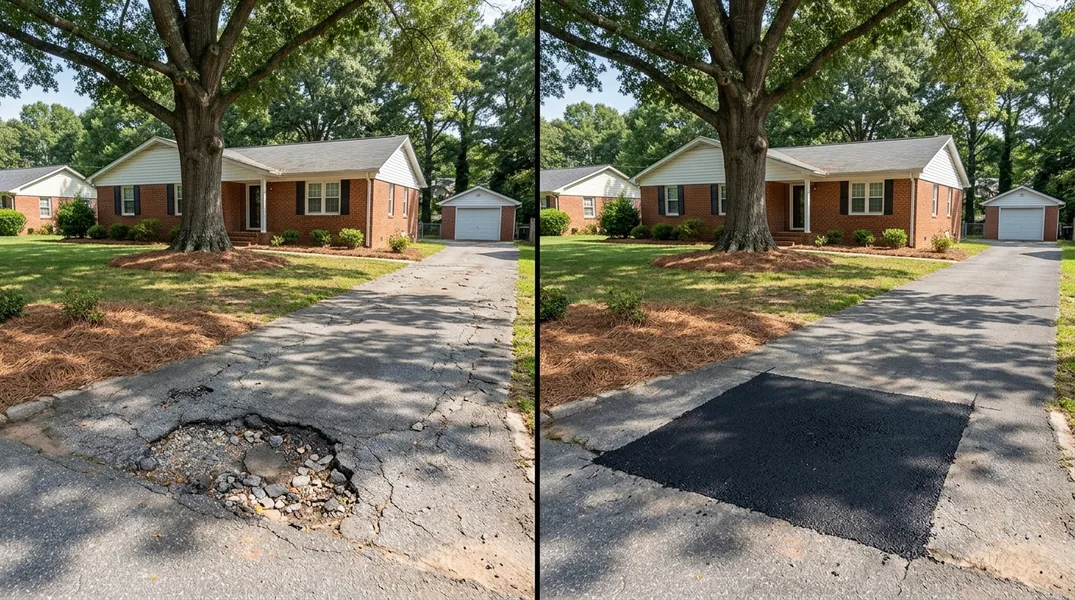
How Winter Weather Creates Potholes in the Triad
The winter months in Greensboro and across the Triad region are notoriously tough on asphalt driveways. Freeze-thaw cycles, ice melt, and heavy precipitation create the perfect storm for pothole formation. When water seeps into small cracks in your asphalt, it expands as it freezes. This expansion pushes the asphalt upward, a phenomenon known as frost heave. When the ice melts, it leaves behind a void beneath the surface. Repeated cycles of freezing and thawing eventually cause the asphalt to collapse inward, creating the potholes you see after winter ends.
What makes the Triad's climate particularly damaging is the unpredictability. Unlike regions with consistent cold, Greensboro experiences temperature swings that accelerate deterioration. One day it might be above freezing, the next below. This constant cycling weakens the asphalt structure far more than steady cold would. Additionally, road salt and de-icing chemicals used on local streets and driveways accelerate the breakdown of asphalt binders, making existing damage worse. If your driveway already had minor cracks before winter, spring will almost certainly reveal new potholes and expanded damage.
Understanding Pothole Repair vs. Full Driveway Replacement
Pothole Repair & Asphalt Patching is often the first solution homeowners consider after spotting damage. A pothole patch involves cleaning out the damaged area, removing loose asphalt, and filling it with new hot-mix asphalt or cold-patch material. For isolated potholes on an otherwise sound driveway, patching is a cost-effective, quick fix that can extend your driveway's life by several years. However, patching is not a permanent solution. It addresses the symptom, not the underlying cause. If your driveway has multiple potholes, widespread cracking, or areas of significant settling, patching will only delay the inevitable need for more comprehensive work.
Full driveway replacement or Asphalt Resurfacing & Overlay becomes the smarter choice when damage is extensive. Resurfacing involves removing the top layer of damaged asphalt and laying a new surface, while an overlay simply adds a fresh layer on top. Both approaches restore structural integrity and provide a long-term solution. The key difference between patching and resurfacing is longevity. A patch might last 2 to 3 years, while a properly installed resurface can perform well for 10 to 15 years or more. Understanding the extent of your damage is the first step in making the right decision.
Signs Your Driveway Needs Patching, Not Full Replacement
If you have one or two isolated potholes and the rest of your driveway is in relatively good condition, Pothole Repair & Asphalt Patching is likely sufficient. Look for driveways where potholes are separated by large stretches of sound asphalt with minimal cracking. If the surface is still fairly smooth, the color is still dark (not faded gray), and you don't see alligator cracking (a spider-web pattern of interconnected cracks), your driveway probably has many years of life left. Patching these isolated problem areas buys you time and is considerably less expensive than a full resurfacing project.
Another indicator that patching makes sense is the age of your driveway. If your asphalt is less than 10 years old and has otherwise held up well, potholes are often the result of poor base preparation, inadequate drainage, or localized impact damage rather than general age-related failure. In these cases, fixing the underlying drainage issue and patching the pothole can prevent future problems in that same spot. However, if potholes keep reappearing in the same location after patching, that signals a deeper structural or drainage problem that patching alone cannot solve.
When Full Driveway Repair or Resurfacing Is the Better Choice
If your driveway shows multiple potholes scattered across its surface, extensive cracking, or areas where the asphalt has sunken or heaved noticeably, full Driveway Repair through resurfacing is the wiser investment. Multiple potholes indicate that the underlying base and asphalt structure have been compromised throughout the driveway, not just in isolated spots. Continuing to patch these areas is like putting a band-aid on a larger wound. Within a year or two, new potholes will likely develop in untreated sections. Resurfacing addresses the entire surface at once, restoring both functionality and curb appeal.
Frost heave damage is another strong indicator that resurfacing is necessary. If you notice areas where the asphalt has buckled upward or where there are significant height differences between sections, the base layer has likely shifted due to freeze-thaw cycles. Patching cannot correct these structural issues. Asphalt Resurfacing & Overlay removes the damaged top layer and, in some cases, allows for base repair before new asphalt is laid. Additionally, if your driveway is more than 15 years old, it has likely reached the end of its design life. Even if only a few potholes are visible now, the entire surface is probably degrading. Investing in resurfacing now prevents emergency repairs and keeps your property looking well-maintained.
Asphalt Driveway Paving & Installation Cost in Greensboro: What to Budget
The pricing for pothole patching is significantly lower than full resurfacing, which makes it attractive to homeowners facing budget constraints. A single pothole patch typically costs between $100 and $300, depending on the size and depth of the damage. If you have multiple potholes, you might spend $500 to $1,500 for several patches. These numbers assume professional work using quality hot-mix asphalt, not DIY cold-patch materials that often fail within months. Cold patches are cheaper upfront but rarely last through another winter cycle in the Triad climate.
Full Asphalt Driveway Paving & Installation or resurfacing costs more per square foot but spreads the expense across your entire driveway. Most homeowners in Greensboro can expect to pay $3 to $8 per square foot for a quality resurface, depending on base condition, site accessibility, and current asphalt prices. For a standard 500-square-foot driveway, that translates to $1,500 to $4,000. While this is a larger upfront investment, resurfacing typically lasts 10 to 15 years, making the per-year cost much lower than repeated patching cycles. Many homeowners find that resurfacing pays for itself through durability and reduced maintenance over time. To understand your specific situation and get an accurate free estimate, reach out to Greensboro Asphalt Paving at (336) 962-5692 for a professional assessment.
Getting Professional Guidance Near You
The best way to determine whether your driveway needs patching or resurfacing is to have a qualified asphalt contractor inspect it in person. A professional can assess the extent of damage, evaluate the base layer, check for drainage issues, and recommend the most cost-effective solution for your specific situation. What looks like a simple pothole problem to a homeowner might be symptomatic of deeper issues that only experience and training can uncover. Local contractors familiar with Triad weather patterns understand how freeze-thaw cycles affect asphalt and can predict whether damage will worsen quickly or remain stable.
Greensboro Asphalt Paving has been serving the local community with expert Driveway Repair and paving solutions for years. Our team knows the specific challenges that winter weather poses to asphalt in this region and can provide honest, straightforward advice about whether patching or resurfacing makes sense for your property. We don't try to upsell you on unnecessary work. Instead, we focus on giving you the solution that delivers the best long-term value. If you're unsure whether those spring potholes warrant a quick patch or a full resurfacing project, contact us today at (336) 962-5692 or visit our website to request a free estimate. Let's help you get your driveway back in shape.
Looking for a professional asphalt paving contractor in Greensboro? Greensboro Asphalt Paving responds fast for all your asphalt paving needs.
Get a Free Quote